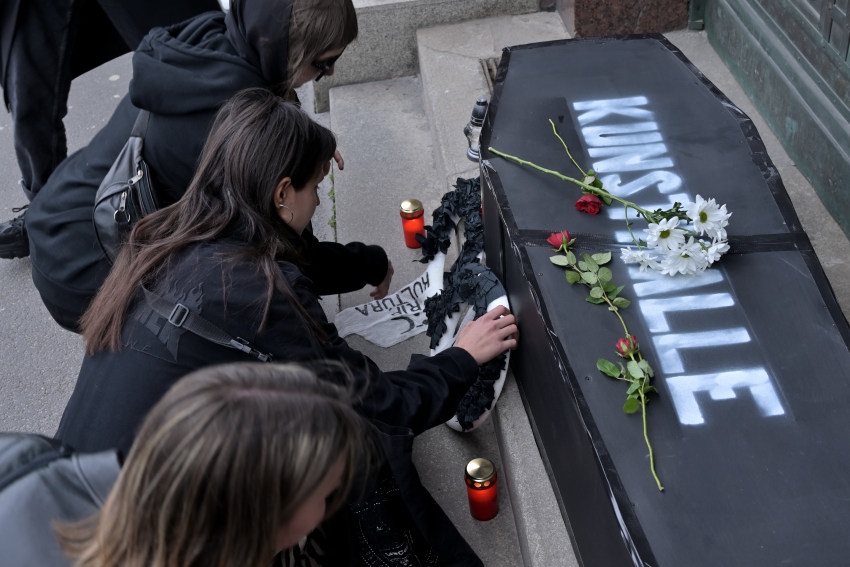
Between Memory Culture and Cancel Culture: (Self-)Censorship and Political Intervention in Germany’s Cultural Landscape

The cultural scene in Germany has been on fire for six months. The still-smoldering aftermath of documenta 15 has been reignited in the face of the current turmoil in Israel and Palestine, leading to cancellations, boycotts, defunding and high-profile resignations across the country’s cultural institutions. The blurring lines between art institutions and state politics has called into question the future of Germany’s position as a central node in the art world and a supporter of culture across the globe.


“You Need a Kind of Tackiness, In the Good Sense of the Word, a Kind of Nonconformity”

The Csakoda collective was founded in 2011 by artists Dominika Trapp and Márton Dés, after they were invited to realize an exhibition in a cultural center in rural Hungary. It was here that they came up with the idea of forming a dynamic group with a changing number of participants, who would primarily exhibit in cultural centers, further away from the elite art scene, but more in touch with local audiences. I interviewed Dominika Trapp about shifts in their praxis since 2011 and their most recent project in the framework of the art festival Nocturnal Interchange at the Institute of Contemporary Art, Dunaújváros.


To Keep Finding a Reason to Smile

Alexandra Pirici and Manuel Pelmus were invited by tranzit.hu to realize a process-based action as part of the first OFF-Biennale Budapest that took place on April 25-26, 2015. In the following interview, I asked the Bucharest-based artists about enactment as a strategy, the relations of immaterial works and museums, and the sustainability of an “off-scene.”


© 2026 tranzit.hu - Contemporary Art Organization

Main partner of tranzit is Erste Foundation

erste stiftung logo